Species Profile: Leucobryum glaucum, the Pale Cushion
Dr Marit Sundqvist · 19 July 2026 · 848 words · 4 min read

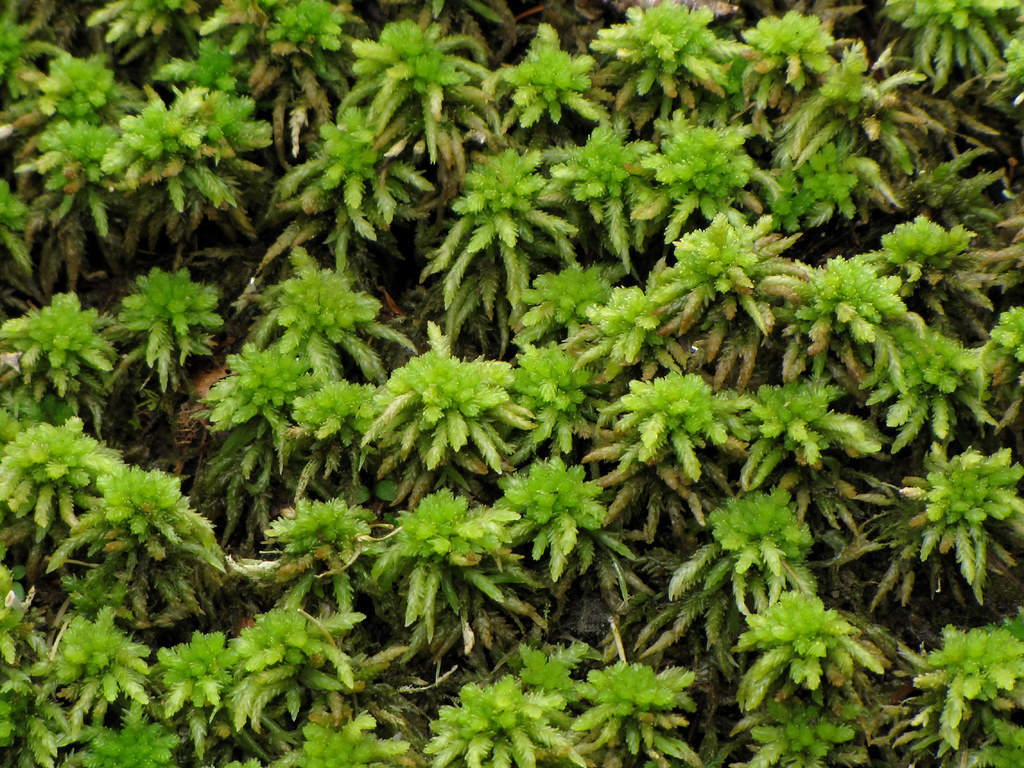
Photo via Flickr, Creative Commons
Leucobryum glaucum is a widespread temperate moss of acidic woodland, forming domed cushions on the forest floor and on decaying stumps across Europe, eastern North America and parts of Asia. In the trade it is sold as cushion moss, pincushion moss, or mood moss — the last name is also applied to Dicranum, which causes endless confusion.
White cushion moss is the sculptural anchor of countless terrarium builds and also one of the most frequently killed. This profile covers its structure, why the pale colour is an optical effect rather than a pigment, the drainage and airflow it demands, how to divide a cushion without destroying it, and the diagnostic difference between a cushion that is dormant and one that is rotting from the base upward.
How to recognise it
The cushion is the giveaway: a tight hemispherical mound, five to twenty centimetres across, so dense that the individual shoots are hard to separate by eye. Colour ranges from a soft grey-green when hydrated to almost chalk white when dry, which is why the genus name means 'white moss'.
The pallor is structural, not pigmentary. Leucobryum leaves are unusually thick, built from a central layer of green chlorophyll-bearing cells sandwiched between one or more layers of large empty hyaline cells. Those empty cells fill with water in wet conditions and with air in dry ones; air-filled cells scatter light, so the cushion turns white as it dehydrates. Watching a cushion shift from white back to green within minutes of misting is the clearest demonstration of the mechanism you will ever see.
Underneath, a mature cushion is a compressed mat of dead shoot bases and rhizoids, often several centimetres thick and holding a surprising volume of water. That reservoir is what allows the plant to sit on nutrient-poor acidic ground, and it is also what kills it in a poorly drained terrarium.
Conditions it actually needs
Light: moderate and indirect, roughly 800 to 2,000 lux for ten to twelve hours. It tolerates dimmer conditions than most terrarium plants but responds to good light with tighter, denser growth. Direct sun through glass will scorch it within a day.
Temperature: this is a temperate species and it is happiest between fifteen and twenty-two degrees Celsius. Above twenty-four it slows markedly; sustained warmth above twenty-eight combined with saturation is the classic recipe for a brown, sour-smelling cushion.
Moisture and air: high ambient humidity, damp but never wet substrate, and — critically — moving air around the crown. In the wild, cushions sit proud of the forest floor and are dried by breeze after every rainfall. Replicate that by seating the cushion slightly raised on a mound rather than sinking it into a hollow, and by ventilating a closed vessel for half an hour every few days if condensation is persistent.
Planting, dividing and propagating
Before planting, trim the underside. Slice away the lower two thirds of the dead brown mat with a bread knife so that perhaps a centimetre of base remains. That mat is a sponge; left thick, it stays permanently saturated and rots from the inside while the surface still looks healthy. Trimming feels brutal and improves survival dramatically.
Seat the trimmed cushion on a mound of substrate with good drainage beneath, and press until the base makes firm contact. Do not bury the edges — a buried rim yellows within weeks. Where a cushion is too large for the vessel, cut it into wedges with a sharp knife rather than pulling it apart; clean cuts heal and knit back together, torn edges fray and brown.
Propagation is straightforward but slow. Divided wedges expand outward by only one to two centimetres a year in ideal conditions. The faster route is fragmentation: blitz a small quantity of clean cushion with buttermilk or plain water into a slurry, paint it onto damp bark or stone, and keep it under high humidity. Expect visible protonema in four to eight weeks and recognisable cushions in six months to a year.
Reading distress signals
White is not a problem. A cushion that has gone pale has simply lost water from its hyaline cells and will re-green on misting. Learn this before you drown a perfectly healthy plant in an attempt to 'save' it.
Yellow-brown creeping in from the edges usually means the rim was buried or the surrounding substrate is too wet. Lift the cushion, trim the affected margin back to clean tissue, improve the drainage beneath and reseat it higher.
Dark grey-brown at the centre with a slightly sour smell is bacterial rot in the mat, and it is the terminal condition. Cut out the affected core immediately, treat the remaining tissue as cuttings, and rebuild that part of the terrarium with a coarser, better-drained base. Black spotting with a fuzzy surface is usually mould feeding on trapped organic debris, and typically resolves with springtails, better airflow and the removal of whatever fell into the cushion in the first place.
Where it works and where it does not
Leucobryum is at its best as a focal mass in a temperate forest-floor build: two or three cushions at different sizes, set on a slope, surrounded by a finer carpeting species. Its pale colour naturally recedes, so a cushion positioned at the rear of the slope makes an excellent distant hill.
It is a poor choice for warm tropical vivariums, for permanently saturated shoreline positions, for sealed bottles with no ventilation at all, and for any build kept above twenty-five degrees. In those settings Vesicularia or Taxiphyllum will do the same visual job with a fraction of the risk.
Sourcing matters ethically as well as horticulturally. Wild cushions take decades to form and are slow to recover from collection, so buy from cultivated suppliers, salvage from legally cleared sites, or propagate from a small piece rather than lifting mature colonies from woodland. A cultivated cushion also arrives free of the beetle larvae and slug eggs that make wild-collected material a gamble in an enclosed vessel.
Extended notes
- Leucobryum sporophytes are rare in cultivation; nearly all spread in the hobby is vegetative. If you see capsules on a purchased cushion, it was almost certainly wild collected.
- The hyaline cell structure means a dry cushion is extraordinarily light. Weighing a cushion is a quick, non-destructive way to judge whether the interior mat is saturated.
- Old cushions naturally hollow at the centre as the dome outgrows its base. This is normal senescence, not disease — divide the ring into wedges and start again.
Frequently asked
My cushion turned white overnight. Is it dying?
Almost certainly not. Pale colour is the hyaline cells emptying of water. Mist lightly and it should re-green within an hour. If it stays white and feels brittle after two days of good humidity, then check the base for rot.
Can I grow it in a fully sealed bottle?
It is possible but risky. Leucobryum wants humidity with air movement, and a sealed narrow-necked bottle provides the first without the second. If you commit to a sealed build, keep the substrate on the dry side of damp and seat the cushion high.
Why is my cushion growing lumpy and uneven?
Uneven light. The dome grows fastest toward the brightest side. Rotate the vessel a quarter turn every week or two and it will even out over a few months.
How do I tell Leucobryum from Dicranum?
Leucobryum forms a tight, pale, hemispherical dome with short blunt leaves. Dicranum makes a looser, deeper green mound with longer leaves that all sweep to one side, as if combed by wind. Dicranum also generally wants more airflow and less consistent moisture.
Source: Original field guide entry — Mossline Species Desk
Related reading

Carpeting Species Compared: Hypnum, Taxiphyllum and Vesicularia
Three pleurocarpous mosses do most of the carpeting work in indoor builds, and they are constantly mislabelled at point of sale. This comparison sets sheet moss, java moss and christmas moss side by side across growth rate, temperature tolerance, texture at scale, attachment behaviour and trimming response, then gives a decision table for matching species to vessel type, and explains why buying moss by trade name alone is unreliable.
Specialist Mosses: Sphagnum, Fissidens and the Liverwort Question
Beyond the standard carpets sit a group of species that reward specific conditions: sphagnum with its extraordinary water chemistry, Fissidens fontanus at the waterline, and the liverworts Riccardia and Marchantia — one prized, one a persistent nuisance. This piece explains what each needs, why live sphagnum behaves nothing like the dried product, and how to tell a desirable liverwort from a colonising weed before it takes over a build.

Polytrichum and Atrichum: The Upright Mosses Nobody Warns You About
Hair cap mosses are the most architecturally striking mosses available to indoor growers and the most frequently killed. Their upright stems and star-shaped rosettes look like a miniature conifer forest, but they carry internal water-conducting tissue and a set of requirements that closed vessels routinely violate. This profile covers identification, why they fail in sealed builds, and the conditions under which they genuinely thrive.