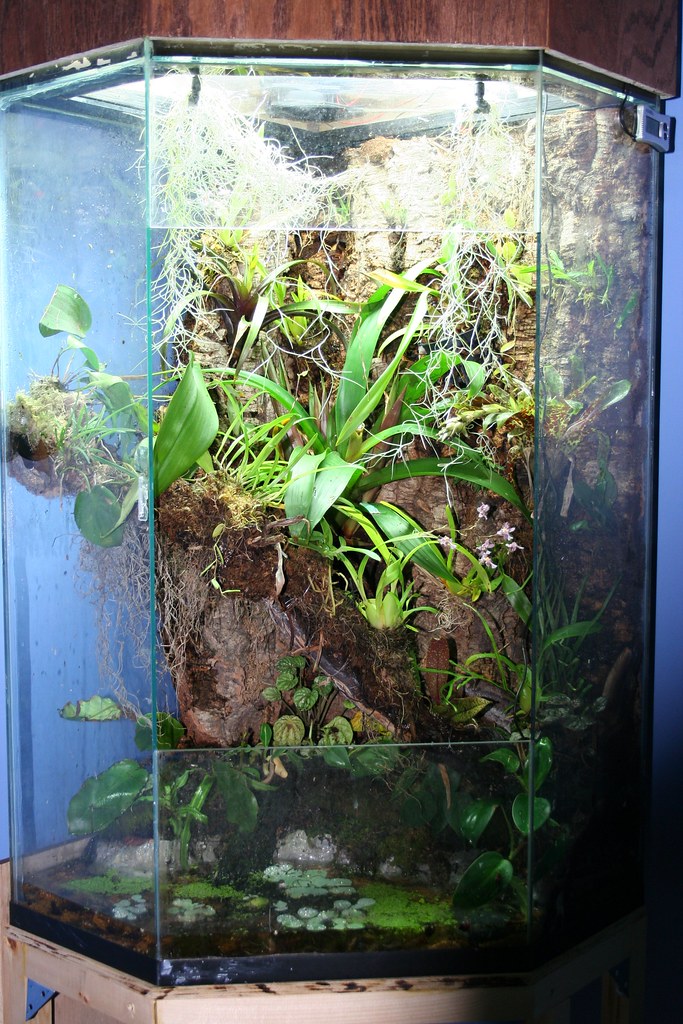
How the small system actually works

Ecology & Advanced

Water, gas and nutrient cycling in closed vessels, springtails and isopods as the decomposition engine, and companion planting that respects moss conditions.

Bonsai tree in a shallow pot with a moss-covered soil surface
Ecology & Advanced

Moss and Bonsai: Borrowing from a Neighbouring Craft

Bonsai growers have been managing moss on the surface of a pot for centuries, under conditions far harsher than any terrarium: shallow substrate, frequent drying, strong light and constant handling. Their solutions are practical, well tested and almost entirely unknown to terrarium builders. This guide covers what bonsai practice does with moss, which of its methods transfer indoors, and where the two crafts genuinely disagree.

Sphagnum moss growing in a damp, humid environment
Ecology & Advanced

Moss, Humidity and the Room Around It

Every planted vessel sits inside a much larger and much less stable system: your home. Room humidity, air changes, heating and even where people sit all shape what happens behind the glass, and understanding that exchange explains a great many otherwise baffling terrarium problems. This guide covers vapour pressure deficit in plain terms, how indoor humidity really behaves across a year, and what a small vessel can and cannot do to the room.

Dense jungle moss growing in a humid environment
Ecology & Advanced

How a Closed Terrarium Actually Cycles Water, Air and Nutrients

A sealed vessel is a working biogeochemical system, not a decoration that happens to be airtight. This explainer follows water through evaporation and condensation, oxygen and carbon dioxide through the daily photosynthesis and respiration cycle, and nitrogen and carbon through the decomposition pathway, then explains what limits each of them in practice and why the microbial community in the substrate does more for stability than any plant in the vessel.

Ferns and moss covering a shaded forest floor
Ecology & Advanced

Light Budgets: How Much Energy a Closed Vessel Actually Needs

Every closed vessel runs on a single energy input, and almost nobody measures it. This piece explains the light compensation point, why duration matters more than intensity for mosses, how photosynthesis and decomposition have to balance for a sealed system to persist, what happens to oxygen and carbon dioxide overnight, and how to work out a realistic daily light budget using nothing more sophisticated than a phone.

The planted margin of a paludarium with damp substrate and moss

Springtails and Isopods: Choosing and Managing a Cleanup Crew

A detritivore population turns a sealed jar into a functioning system, and it is the cheapest upgrade available to any build. This guide covers what springtails and dwarf isopods actually do, how to choose between the common cultures, how to seed and feed a population without fouling the substrate, what to do when numbers explode or crash, and which invertebrates are best kept out of a small planted vessel entirely.

A rabbit's foot fern growing inside a glass terrarium
Ecology & Advanced

Companion Planting: What Grows Well Alongside Moss Indoors

Moss sets the conditions and everything else has to live within them: high humidity, low light, cool to moderate warmth and a substrate that must never be fertilised. This guide covers the small ferns, creeping vines, miniature epiphytes and the handful of flowering plants that genuinely thrive in those conditions, the popular species that are sold for terrariums and should not be, and how to plan a planting so one species does not erase the rest.