Field-guide profiles for indoor growers

Moss Species Guide

Identification, habit, tolerance ranges and honest difficulty ratings for the cushion mosses, carpeting species, sphagnum and liverworts used in indoor builds.

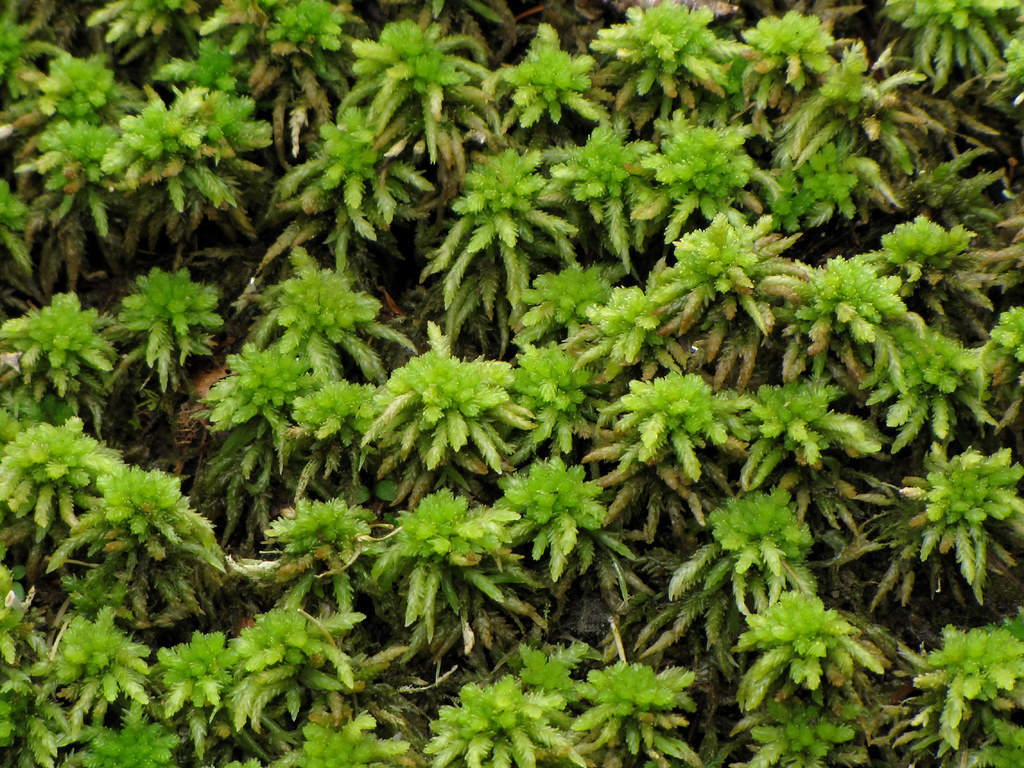
Upright moss shoots growing densely across a fallen log
Moss Species Guide

Polytrichum and Atrichum: The Upright Mosses Nobody Warns You About

Hair cap mosses are the most architecturally striking mosses available to indoor growers and the most frequently killed. Their upright stems and star-shaped rosettes look like a miniature conifer forest, but they carry internal water-conducting tissue and a set of requirements that closed vessels routinely violate. This profile covers identification, why they fail in sealed builds, and the conditions under which they genuinely thrive.

Moss cushion with numerous slender sporophyte stalks bearing spore capsules
Moss Species Guide

Reading Sporophytes: What Moss Capsules Tell You

The thin stalks and swollen capsules that rise from a healthy moss cushion are not decoration. They are the plant's sexual generation, they are the single most reliable feature for identifying a species, and their presence or absence is a running commentary on how well your vessel is doing. This guide explains what a sporophyte is, how to read one, and what it means when your moss produces them indoors — or refuses to.

A designed moss garden with varied cushions and stonework
Moss Species Guide

Bryum, Ceratodon and the Tough Mosses Growing on Your Pavement

The mosses colonising kerbs, walls and gutters are the toughest bryophytes most people will ever encounter, and they are almost entirely ignored by the terrarium hobby. This profile covers the silvery Bryum argenteum, the ubiquitous Ceratodon purpureus and the wall-crevice specialists, explaining what they tolerate, why they hate the conditions we normally provide, and where they earn a place in a build.

A pale green cushion of Leucobryum glaucum growing on woodland ground
Moss Species Guide

Species Profile: Leucobryum glaucum, the Pale Cushion

White cushion moss is the sculptural anchor of countless terrarium builds and also one of the most frequently killed. This profile covers its structure, why the pale colour is an optical effect rather than a pigment, the drainage and airflow it demands, how to divide a cushion without destroying it, and the diagnostic difference between a cushion that is dormant and one that is rotting from the base upward.

Carpet moss growing alongside a trailing plant inside a terrarium

Carpeting Species Compared: Hypnum, Taxiphyllum and Vesicularia

Three pleurocarpous mosses do most of the carpeting work in indoor builds, and they are constantly mislabelled at point of sale. This comparison sets sheet moss, java moss and christmas moss side by side across growth rate, temperature tolerance, texture at scale, attachment behaviour and trimming response, then gives a decision table for matching species to vessel type, and explains why buying moss by trade name alone is unreliable.

Sphagnum moss growing in a dense wet mat
Moss Species Guide

Specialist Mosses: Sphagnum, Fissidens and the Liverwort Question

Beyond the standard carpets sit a group of species that reward specific conditions: sphagnum with its extraordinary water chemistry, Fissidens fontanus at the waterline, and the liverworts Riccardia and Marchantia — one prized, one a persistent nuisance. This piece explains what each needs, why live sphagnum behaves nothing like the dried product, and how to tell a desirable liverwort from a colonising weed before it takes over a build.